Welcome to the next generation of AI innovation. Google has now made its position official at Cloud Next 2025: Artificial Intelligence is not just restricted to being a feature, but it is the future. From high-performance chips and flexible AI models to multi-agent systems and mind-blowing creative tools, Google is creating an ecosystem where AI does the heavy lifting, and human potential can flourish.
Want to know more about the Cloud Next 2025? Relax! At Proximate Solutions, we have outlined every necessary information in this blog. Here’s a deep dive into what happened at Cloud Next and why it matters for businesses, developers, creatives, and just about anyone with a Wi-Fi connection.
Starting with what’s under the hood, Google has announced Ironwood, its seventh-generation Tensor Processing Unit (TPU), a silicon monster that’s reshaping AI performance. With a 10x speed boost over its predecessor and a staggering 3,600x jump over the original TPU, Ironwood produces 42.5 exaflops from a single pod stuffed with more than 9,000 chips. On a human scale, that’s swapping your bike for a rocket ship.
Make your site the obvious answer in Google and AI tools like Perplexity and ChatGPT.
Proximate Solutions will audit your site and deliver a simple plan you can act on immediately.
What you get (no cost, no commitment):Claim Your Custom AI Visibility & Growth Blueprint
Yes, I Want My Free Blueprint →
Ironwood is meant to train and run big models more quickly, affordably, and sustainably. As AI models inflate in complexity, particularly with real-time generation capabilities, this type of brawn in the backend is the only way to maintain affordability and responsiveness. This shift also indicates Google’s more fundamental goal: Not merely to keep up with OpenAI, Amazon, and NVIDIA but to take the lead.
Performance is just one-half of the coin. However, flexibility and accessibility are also equally important. Google realizes that not all use cases require a behemoth model incinerating exaflops per second. That’s where Gemini 2.5 Flash takes center stage.
This is the lighter, speedier relative of Gemini 2.5 Pro. It’s tuned for low cost and latency while providing advanced features such as reasoning and tool integration. Better still? Developers will be able to control how much “thinking” the model does, providing complete control over performance vs. cost trade-offs. Coming soon to Vertex AI, Gemini 2.5 Flash is Google’s response to, “You don’t have to have a supercomputer to employ superintelligence.
In perhaps the most visionary announcement of the day, Google staked its claim in the multi-agent future with two revolutionary frameworks:
ADK allows developers to spin up intelligent agents in fewer than 100 lines of code. It comes with Agent Garden, a plug-and-play toolkit with 100+ connectors for APIs, cloud tools, and third-party services. Whether syncing with Google Calendar, retrieving Salesforce data, or sending Slack messages, these agents are designed to do all the work, not just merely talk.
Imagine A2A as the Bluetooth of AI agents. It is a common communication standard that enables agents to collaborate across platforms and ecosystems. More than 50 partners are already on board, making A2A a strong contender to become the underlying protocol of autonomous agent interoperability. A2A and ADK together are the foundation for an AI future where AI doesn’t just help you, it collaborates with other AI to accomplish things while you’re sleeping.
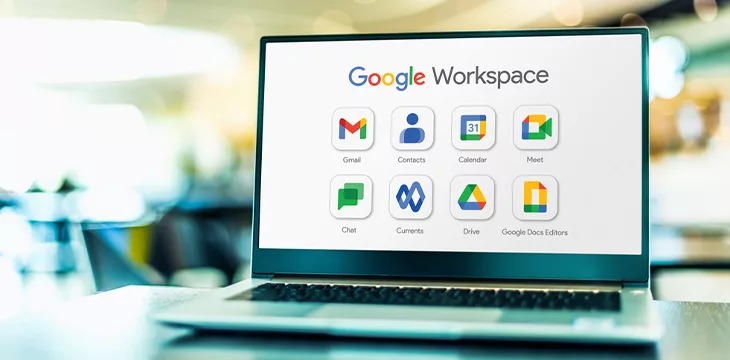
It wouldn’t be a Google event without something for the average user. Workspace Flows is the next-generation automation platform built into Docs, Sheets, Meet, and Chat, and it is driven by custom Gemini agents named Gems. For companies, this is the holy grail, as they will have access to AI-powered. Customizable workflows that actually fit into the platforms they’re already using. Here’s what that means:
In a world where content is king, Google is handing you the crown. Google is no longer coding smarter; it’s making smarter. During Cloud Next 2025, it demonstrated significant advances in generative media, transforming imagination into production-grade assets within seconds. Here is a sneak peek into the new advances:
Cloud Next 2025 did not unveil tools; it revealed a vision. Ironwood and Gemini to ADK, A2A, and Workspace Flows, Google is building a full-stack AI ecosystem. The main takeaway? If you are a developer, business leader, or artist, Google wishes to be your go-to for creating, deploying, scaling, and leveraging AI. It is no longer about one-off tools. It’s about orchestration.
Each piece, chip, model, agent, and automation work together to remove friction, reduce cost, and amplify impact. When those tools can talk to each other and adapt in real-time. We are not just building apps but intelligent systems.
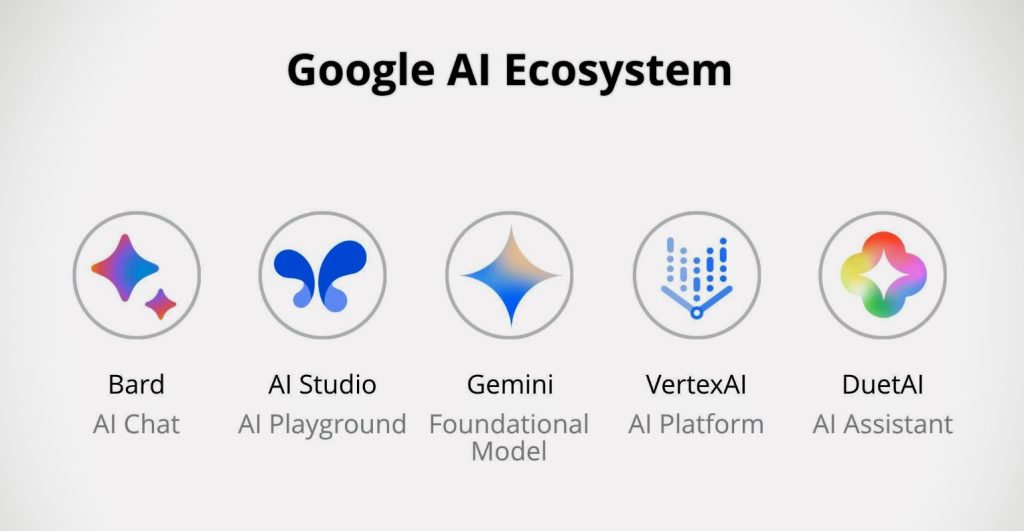
With competitors like OpenAI pushing GPT-5 rumors, Anthropic launching Claude Max, and Amazon’s Nova Sonic redefining speech AI Google needed a bold move. And it didn’t disappoint. Google has staked its claim by investing in infrastructure (Ironwood), access (Gemini 2.5 Flash), developer tools (ADK & A2A), workplace productivity (Workspace Flows), and creative generation (Imagen, Lyria, Veo). This is not about staying in the game. It’s about commanding the next generation of AI.
Cloud Next 2025 made one thing clear, AI is no longer something extra; it is a necessity. Whether you are crafting a pitch deck, developing an app, automating support processes, or orchestrating a music video, Google is arming you with capabilities that can think, learn, create, and collaborate. The tech accelerates, the models sharpen, the tools become unified, and the agents are getting better.
1- What were the defining enterprise AI breakthroughs announced at Google Cloud Next 2025?
The event shifted industry focus on Autonomous AI Agent architectures and the deployment of the Gemini 2.5 model ecosystem. Core infrastructure highlights featured the introduction of Agent space for orchestration of multi-agent digital workforces, alongside Ironwood Google’s seventh-generation custom Tensor Processing Unit (TPU) engineered to optimize performance scales and minimize operational costs.
2- How is a Google AI Agent functionally distinct from a standard conversational chatbot?
Traditional chat interfaces are limited to generating informational responses, whereas a Google AI Agent utilizes agentic workflows to execute autonomous, end-to-end tasks. For example, these advanced entities can independently conduct market research, manipulate database schemas, and dispatch comprehensive executive summaries without requiring micro-management at individual execution layers.
3- What technical performance advancements does the Gemini 2.5 architecture introduce?
The Gemini 2.5 framework particularly across the optimized Flash and Pro iterations delivers enhanced deep reasoning capabilities. This enables the model to resolve complex, multi-layered problems, execute highly efficient code blocks, and parse massive datasets across an extensive two-million-token context window while minimizing algorithmic hallucinations.
4- Are these enterprise-grade Google Cloud AI tools accessible to small and medium-sized organizations?
Yes. Through the introduction of Firebase Studio and strategic updates to Cloud Run, Google has significantly democratized the deployment of AI-driven applications by offering low-code infrastructure. These integrations lower technical barriers to entry, enabling agile operations to build and scale proprietary AI workflows.
5- Does the updated cloud computing hardware yield faster operational processing metrics?
Significantly. The next-generation Ironwood TPU architecture introduces a five-fold expansion in computational processing capacity compared to previous computing systems. This hardware evolution enables enterprises to execute complex model inference at hyper-low latencies while reducing the cost-per-token overhead of every query.
Welcome to the next generation of AI innovation. Google has now made its position official at Cloud Next 2025: Artificial Intelligence is not just restricted to being a feature, but it is the future. From high-performance chips and flexible AI models to multi-agent systems and mind-blowing creative tools, Google is creating an ecosystem where AI does the heavy lifting, and human potential can flourish.
Want to know more about the Cloud Next 2025? Relax! At Proximate Solutions, we have outlined every necessary information in this blog. Here’s a deep dive into what happened at Cloud Next and why it matters for businesses, developers, creatives, and just about anyone with a Wi-Fi connection.
Starting with what’s under the hood, Google has announced Ironwood, its seventh-generation Tensor Processing Unit (TPU), a silicon monster that’s reshaping AI performance. With a 10x speed boost over its predecessor and a staggering 3,600x jump over the original TPU, Ironwood produces 42.5 exaflops from a single pod stuffed with more than 9,000 chips. On a human scale, that’s swapping your bike for a rocket ship.
Make your site the obvious answer in Google and AI tools like Perplexity and ChatGPT.
Proximate Solutions will audit your site and deliver a simple plan you can act on immediately.
What you get (no cost, no commitment):Claim Your Custom AI Visibility & Growth Blueprint
Yes, I Want My Free Blueprint →
Ironwood is meant to train and run big models more quickly, affordably, and sustainably. As AI models inflate in complexity, particularly with real-time generation capabilities, this type of brawn in the backend is the only way to maintain affordability and responsiveness. This shift also indicates Google’s more fundamental goal: Not merely to keep up with OpenAI, Amazon, and NVIDIA but to take the lead.
Performance is just one-half of the coin. However, flexibility and accessibility are also equally important. Google realizes that not all use cases require a behemoth model incinerating exaflops per second. That’s where Gemini 2.5 Flash takes center stage.
This is the lighter, speedier relative of Gemini 2.5 Pro. It’s tuned for low cost and latency while providing advanced features such as reasoning and tool integration. Better still? Developers will be able to control how much “thinking” the model does, providing complete control over performance vs. cost trade-offs. Coming soon to Vertex AI, Gemini 2.5 Flash is Google’s response to, “You don’t have to have a supercomputer to employ superintelligence.
In perhaps the most visionary announcement of the day, Google staked its claim in the multi-agent future with two revolutionary frameworks:
ADK allows developers to spin up intelligent agents in fewer than 100 lines of code. It comes with Agent Garden, a plug-and-play toolkit with 100+ connectors for APIs, cloud tools, and third-party services. Whether syncing with Google Calendar, retrieving Salesforce data, or sending Slack messages, these agents are designed to do all the work, not just merely talk.
Imagine A2A as the Bluetooth of AI agents. It is a common communication standard that enables agents to collaborate across platforms and ecosystems. More than 50 partners are already on board, making A2A a strong contender to become the underlying protocol of autonomous agent interoperability. A2A and ADK together are the foundation for an AI future where AI doesn’t just help you, it collaborates with other AI to accomplish things while you’re sleeping.
It wouldn’t be a Google event without something for the average user. Workspace Flows is the next-generation automation platform built into Docs, Sheets, Meet, and Chat, and it is driven by custom Gemini agents named Gems. For companies, this is the holy grail, as they will have access to AI-powered. Customizable workflows that actually fit into the platforms they’re already using. Here’s what that means:
In a world where content is king, Google is handing you the crown. Google is no longer coding smarter; it’s making smarter. During Cloud Next 2025, it demonstrated significant advances in generative media, transforming imagination into production-grade assets within seconds. Here is a sneak peek into the new advances:
Cloud Next 2025 did not unveil tools; it revealed a vision. Ironwood and Gemini to ADK, A2A, and Workspace Flows, Google is building a full-stack AI ecosystem. The main takeaway? If you are a developer, business leader, or artist, Google wishes to be your go-to for creating, deploying, scaling, and leveraging AI. It is no longer about one-off tools. It’s about orchestration.
Each piece, chip, model, agent, and automation work together to remove friction, reduce cost, and amplify impact. When those tools can talk to each other and adapt in real-time. We are not just building apps but intelligent systems.
With competitors like OpenAI pushing GPT-5 rumors, Anthropic launching Claude Max, and Amazon’s Nova Sonic redefining speech AI Google needed a bold move. And it didn’t disappoint. Google has staked its claim by investing in infrastructure (Ironwood), access (Gemini 2.5 Flash), developer tools (ADK & A2A), workplace productivity (Workspace Flows), and creative generation (Imagen, Lyria, Veo). This is not about staying in the game. It’s about commanding the next generation of AI.
Cloud Next 2025 made one thing clear, AI is no longer something extra; it is a necessity. Whether you are crafting a pitch deck, developing an app, automating support processes, or orchestrating a music video, Google is arming you with capabilities that can think, learn, create, and collaborate. The tech accelerates, the models sharpen, the tools become unified, and the agents are getting better.
1- What were the defining enterprise AI breakthroughs announced at Google Cloud Next 2025?
The event shifted industry focus on Autonomous AI Agent architectures and the deployment of the Gemini 2.5 model ecosystem. Core infrastructure highlights featured the introduction of Agent space for orchestration of multi-agent digital workforces, alongside Ironwood Google’s seventh-generation custom Tensor Processing Unit (TPU) engineered to optimize performance scales and minimize operational costs.
2- How is a Google AI Agent functionally distinct from a standard conversational chatbot?
Traditional chat interfaces are limited to generating informational responses, whereas a Google AI Agent utilizes agentic workflows to execute autonomous, end-to-end tasks. For example, these advanced entities can independently conduct market research, manipulate database schemas, and dispatch comprehensive executive summaries without requiring micro-management at individual execution layers.
3- What technical performance advancements does the Gemini 2.5 architecture introduce?
The Gemini 2.5 framework particularly across the optimized Flash and Pro iterations delivers enhanced deep reasoning capabilities. This enables the model to resolve complex, multi-layered problems, execute highly efficient code blocks, and parse massive datasets across an extensive two-million-token context window while minimizing algorithmic hallucinations.
4- Are these enterprise-grade Google Cloud AI tools accessible to small and medium-sized organizations?
Yes. Through the introduction of Firebase Studio and strategic updates to Cloud Run, Google has significantly democratized the deployment of AI-driven applications by offering low-code infrastructure. These integrations lower technical barriers to entry, enabling agile operations to build and scale proprietary AI workflows.
5- Does the updated cloud computing hardware yield faster operational processing metrics?
Significantly. The next-generation Ironwood TPU architecture introduces a five-fold expansion in computational processing capacity compared to previous computing systems. This hardware evolution enables enterprises to execute complex model inference at hyper-low latencies while reducing the cost-per-token overhead of every query.