
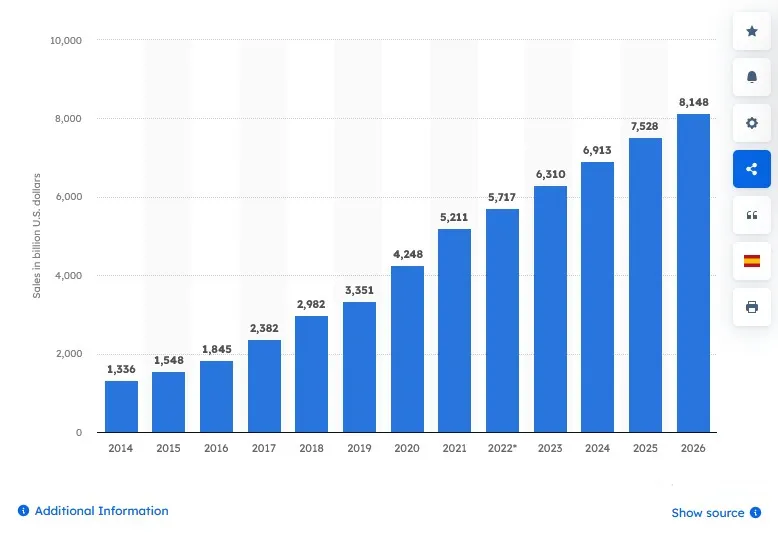
By 2027, analysts anticipate online sales to surpass $7.9 trillion, accounting for 23% of all retail sales. 📈 This presents a challenging outlook for merchants, with higher competition and greater consumer expectations. To stay ahead, start preparing your e-commerce strategies today with a trusted partner like Proximate Solutions. 💼
Businesses can enhance customer experiences and maximize conversions by focusing on these Four trends:
Online stores have significant growth potential this year. Here’s why you should invest now:
Gen Z and Millennials, being tech-savvy, are redefining online shopping habits. The Gen Z population is set to grow from 45.5 million in 2023 to 61.1 million by 2027, bringing dramatic changes to the industry.
These generations are not just shoppers; they are also influencers, shaping the market with their unique online habits and technological expertise.
Looking ahead, these key trends will impact how businesses engage with consumers:
Customer Experience (CX) is crucial for e-commerce success. McKinsey research shows companies excelling in CX see double the revenue growth. To improve CX:

As we approach 2025, the e-commerce landscape is primed for innovation and growth. Businesses that prioritize technological advancements, sustainability, and customer-centric solutions will thrive in this evolving market.
Start your journey toward success with Proximate Solutions and make 2025 your most prosperous year yet!
1. What are the top ecommerce trends in 2025?
Top ecommerce trends include AI-driven personalization, social commerce, voice shopping, augmented reality, and privacy-focused marketing.
2. How is AI changing ecommerce in 2025?
AI is transforming ecommerce by enabling personalized recommendations, automated customer service, and smarter shopping experiences across the entire customer journey.
3. What is the future of ecommerce?
The future of ecommerce is focused on seamless, omnichannel experiences, where customers can shop across multiple platforms with personalized and frictionless journeys.
4. Why is personalization important in ecommerce?
Personalization improves customer experience, increases conversions, and builds loyalty by delivering relevant content and product recommendations.
5. What is social commerce?
Social commerce allows users to discover and purchase products directly through social media platforms, making shopping more interactive and convenient.
6. How will mobile commerce grow in 2025?
Mobile commerce is expected to dominate ecommerce, with a significant portion of online sales happening through smartphones due to convenience and improved user experience.
7. What role does AR play in ecommerce?
Augmented reality helps customers visualize products before buying, reducing uncertainty and improving purchase decisions.
8. What is omnichannel ecommerce?
Omnichannel ecommerce provides a seamless shopping experience across websites, apps, social media, and physical stores, ensuring consistency across all touchpoints.
9. How can businesses prepare for future ecommerce trends?
Businesses can prepare by adopting AI tools, improving user experience, focusing on personalization, and investing in secure and scalable platforms.
10. What is the biggest challenge in ecommerce in 2025?
Major challenges include data privacy concerns, rising competition, and the need to deliver fast, personalized, and secure shopping experiences.
By 2027, analysts anticipate online sales to surpass $7.9 trillion, accounting for 23% of all retail sales. 📈 This presents a challenging outlook for merchants, with higher competition and greater consumer expectations. To stay ahead, start preparing your e-commerce strategies today with a trusted partner like Proximate Solutions. 💼
Businesses can enhance customer experiences and maximize conversions by focusing on these Four trends:
Online stores have significant growth potential this year. Here’s why you should invest now:
Gen Z and Millennials, being tech-savvy, are redefining online shopping habits. The Gen Z population is set to grow from 45.5 million in 2023 to 61.1 million by 2027, bringing dramatic changes to the industry.
These generations are not just shoppers; they are also influencers, shaping the market with their unique online habits and technological expertise.
Looking ahead, these key trends will impact how businesses engage with consumers:
Customer Experience (CX) is crucial for e-commerce success. McKinsey research shows companies excelling in CX see double the revenue growth. To improve CX:
As we approach 2025, the e-commerce landscape is primed for innovation and growth. Businesses that prioritize technological advancements, sustainability, and customer-centric solutions will thrive in this evolving market.
Start your journey toward success with Proximate Solutions and make 2025 your most prosperous year yet!
1. What are the top ecommerce trends in 2025?
Top ecommerce trends include AI-driven personalization, social commerce, voice shopping, augmented reality, and privacy-focused marketing.
2. How is AI changing ecommerce in 2025?
AI is transforming ecommerce by enabling personalized recommendations, automated customer service, and smarter shopping experiences across the entire customer journey.
3. What is the future of ecommerce?
The future of ecommerce is focused on seamless, omnichannel experiences, where customers can shop across multiple platforms with personalized and frictionless journeys.
4. Why is personalization important in ecommerce?
Personalization improves customer experience, increases conversions, and builds loyalty by delivering relevant content and product recommendations.
5. What is social commerce?
Social commerce allows users to discover and purchase products directly through social media platforms, making shopping more interactive and convenient.
6. How will mobile commerce grow in 2025?
Mobile commerce is expected to dominate ecommerce, with a significant portion of online sales happening through smartphones due to convenience and improved user experience.
7. What role does AR play in ecommerce?
Augmented reality helps customers visualize products before buying, reducing uncertainty and improving purchase decisions.
8. What is omnichannel ecommerce?
Omnichannel ecommerce provides a seamless shopping experience across websites, apps, social media, and physical stores, ensuring consistency across all touchpoints.
9. How can businesses prepare for future ecommerce trends?
Businesses can prepare by adopting AI tools, improving user experience, focusing on personalization, and investing in secure and scalable platforms.
10. What is the biggest challenge in ecommerce in 2025?
Major challenges include data privacy concerns, rising competition, and the need to deliver fast, personalized, and secure shopping experiences.