
We have seen a lot of AI involvement in marketing strategies in the previous year. Now, as the new year 2025 begins, we are about to see AI involvement more, obviously for some good. AI is transforming the way how companies develop their market plan. From targeting the right audience to actual product/ service design, companies tend to see amazing results.
AI defines the future of marketing as there are healthier forecasts and innovative plans for new challenges that can be made efficiently. Let’s get a deep insight into how AI-Driven Marketing Strategies in 2025 make a difference.
Segmenting the customer has always been a crucial aspect of designing successful marketing strategies. Normally, it has always been a difficult task to figure out the nitty-gritty of human behavior, and there might be more chances you are not getting it accurately. But AI has simplified this process well. AI segments the group on more precise and smaller levels that are closely related to the nature of your business. This will ultimately take you on the path of designing successful marketing strategies.
Make your site the obvious answer in Google and AI tools like Perplexity and ChatGPT.
Proximate Solutions will audit your site and deliver a simple plan you can act on immediately.
What you get (no cost, no commitment):Claim Your Custom AI Visibility & Growth Blueprint
Yes, I Want My Free Blueprint →
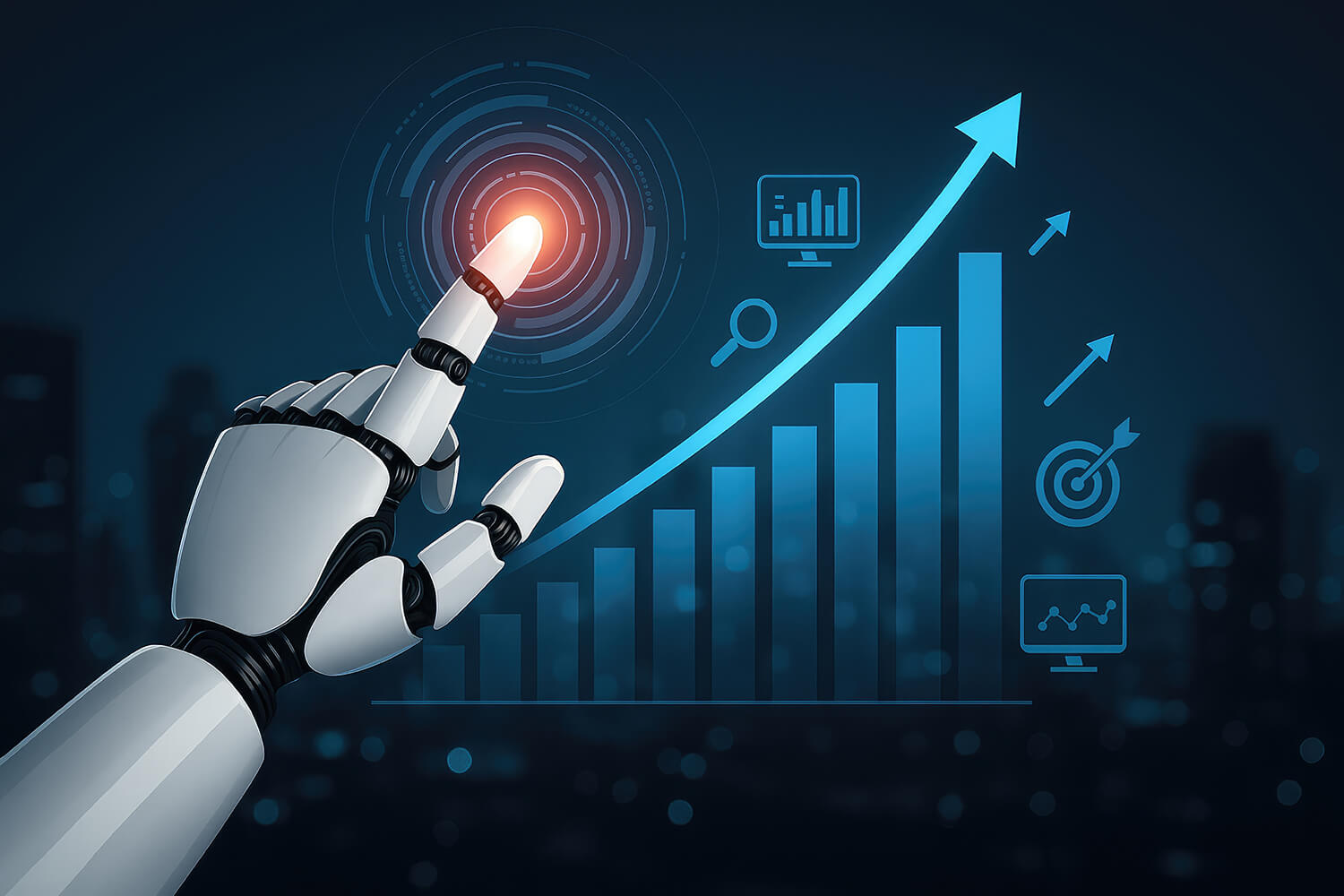
Everything is done quite efficiently, from segmenting to designing marketing campaigns, but if the implementation is not done right, every effort will be wasted. Well, AI-driven marketing Strategies in 2025 also facilitated the management of marketing campaigns by taking away all the worries of putting considerable time and effort manually. AI helps schedule social media content to send mail. With the use of AI in managing marketing campaigns, you do not get restricted to answering the customer or making social media engagement just for 9 to 6 working hours. You can stay in touch with customers all day long through every automated operation.
AI repeats routine operations, thus cutting down employees’ salaries and enhancing productivity. Through chatbots, it receives and responds to customer questions, controls inventory, and processes big data. This assists firms in reducing costs while at the same time offering or enhancing service standards. Not just restricted to cost efficiency, Automation eliminates wastage in human work, minimizes human tasks that trigger errors, and allows the use of resources for more value-added tasks.
AI processes in real-time large numbers of variables and presents conclusions that can use to make business decisions. In a nutshell, AI can predict trends, consumers, or market situations. This makes it easier, faster, and more accurate to make a decision since business entities have to adjust to this environment to be competitive and reduce risk, and harness business opportunities.
Marketing stakeholders benefit from AI-Driven Marketing Strategies in 2025 since it can adapt products, services, and content based on individual interests. Everyone and their interests are different, so giving them a personalized experience is always a good bet. AI leads to a situation where organizations are depicting a targeted approach, which, when put into practice, results in high levels of consumer satisfaction and higher sales. The direct engagement with the audience and targeting him/her individually or a group of like-minded people by a brand make him/her a loyal customer.
AI provides route opportunities to the business communities for changing and responding more effectively than opponents. Many businesses leverage AI for data analysis to identify trends regarding their markets, products, and customers and can move swiftly in response to trends. In essence, integrating AI into operations helps firms to design better systems, bring products to market faster and deliver world-class products, and thus stay ahead.
AI is used in businesses to produce all new innovation drives to create new products and services. For instance, AI applications appear in realizing self-driving cars, smart healthcare systems, and Generative art. These innovations address new shifts in consumer buying behavior and tend to innovate around existing industries, ensuring the company becomes a market leader.
Most companies are targeting to go on a global level. However, this will definitely bring in various barriers such as language, culture, or any other. AI reduces this barrier and helps you design global marketing campaigns efficiently. It helps to adapt products or services as well as their advertisement to local cultures. Companies are in a position to respond to regional differences, language barriers, and rules and regulations. Relative to market conditions and consumers’ behaviors in different geo-location, AI helps business organizations in the exploration of new markets with heightened localization and lower risks, enhancing competitive advantage on the word stage.
The AI-Driven Marketing Strategies in 2025 is expect to carve its way more deeply in the future. In the future, AI will surely give a more personalized experience. The prospect of applying advanced intelligent technologies to the marketing function offers the exciting vision of taking such customer strategies to a whole new level. Marketers will use a large amount of data to identify customer needs and respond to customized experiences. They use AI in repetitive processes, such as content generation, the personalization of emails, and ad targeting, ensuring that marketers divert their attention to the more complex tasks.
Conversational AI represents one of the most promising areas for future investment, offering brands the ability to deliver seamless, real-time customer support that significantly elevates the user experience. Beyond automated assistance, advanced AI tools will refine customer journey mapping. This enables companies to precisely track every touchpoint across platforms, ensuring a cohesive and frictionless omni-channel interaction.
As algorithms grow more sophisticated, implementing hyper-personalization will become increasingly seamless. Audiences will interact with highly targeted content, tailored product recommendations, and predictive offers perfectly matched to their immediate needs. By pairing these capabilities with predictive analytics, marketers can anticipate emerging trends, forecast consumer behaviors, and dynamically adjust their campaigns in real time.
However, this rapid integration introduces critical challenges, particularly regarding data privacy, ethical usage, and the explainability of complex AI decision-making. While navigating these technical and regulatory hurdles requires careful strategy, the businesses that successfully implement AI stand to unlock massive, long-term operational growth.
1- What is the role of conversational AI in modern marketing?
Conversational AI provides businesses with the ability to offer immediate, real-time customer support. This technology bridges communication gaps, automates complex inquiries, and massively enhances overall user experiences.
2- How does AI improve cross-platform customer journeys?
Advanced AI models refine journey mapping by accurately tracking user behavior across disparate touchpoints. This allows brands to provide cohesive, fluid, and frictionless omnichannel interactions.
3- What is hyper-personalization in digital marketing?
Hyper-personalization uses evolving AI algorithms to analyze live consumer data. Instead of generic messaging, users are presented with highly targeted content, custom product recommendations, and unique promotions.
4- How does predictive analytics benefit modern marketers?
Predictive analytics processes past data to forecast emerging consumer trends and campaign outcomes. This allows marketing teams to proactively adapt their strategies and make critical budget adjustments in real time.
5- What are the main data hurdles when adopting AI tools?
The rapid shift to AI introduces serious responsibilities surrounding user data security, ethical algorithm training, and the explainability of how AI systems make complex target-audience decisions.
6- Can small businesses benefit from AI marketing strategies?
Yes. AI automation handles tedious operational tasks like list segmentation and content scaling. This efficiency allows smaller, lean marketing teams to compete effectively against much larger competitors.
7- Why is the marketing landscape shifting from push to pull?
Instead of brands forcing ads on individuals, users now leverage intelligent AI assistants to organically pull curated recommendations, shifting marketing focus toward building data visibility and authority.
We have seen a lot of AI involvement in marketing strategies in the previous year. Now, as the new year 2025 begins, we are about to see AI involvement more, obviously for some good. AI is transforming the way how companies develop their market plan. From targeting the right audience to actual product/ service design, companies tend to see amazing results.
AI defines the future of marketing as there are healthier forecasts and innovative plans for new challenges that can be made efficiently. Let’s get a deep insight into how AI-Driven Marketing Strategies in 2025 make a difference.
Segmenting the customer has always been a crucial aspect of designing successful marketing strategies. Normally, it has always been a difficult task to figure out the nitty-gritty of human behavior, and there might be more chances you are not getting it accurately. But AI has simplified this process well. AI segments the group on more precise and smaller levels that are closely related to the nature of your business. This will ultimately take you on the path of designing successful marketing strategies.
Make your site the obvious answer in Google and AI tools like Perplexity and ChatGPT.
Proximate Solutions will audit your site and deliver a simple plan you can act on immediately.
What you get (no cost, no commitment):Claim Your Custom AI Visibility & Growth Blueprint
Yes, I Want My Free Blueprint →
Everything is done quite efficiently, from segmenting to designing marketing campaigns, but if the implementation is not done right, every effort will be wasted. Well, AI-driven marketing Strategies in 2025 also facilitated the management of marketing campaigns by taking away all the worries of putting considerable time and effort manually. AI helps schedule social media content to send mail. With the use of AI in managing marketing campaigns, you do not get restricted to answering the customer or making social media engagement just for 9 to 6 working hours. You can stay in touch with customers all day long through every automated operation.
AI repeats routine operations, thus cutting down employees’ salaries and enhancing productivity. Through chatbots, it receives and responds to customer questions, controls inventory, and processes big data. This assists firms in reducing costs while at the same time offering or enhancing service standards. Not just restricted to cost efficiency, Automation eliminates wastage in human work, minimizes human tasks that trigger errors, and allows the use of resources for more value-added tasks.
AI processes in real-time large numbers of variables and presents conclusions that can use to make business decisions. In a nutshell, AI can predict trends, consumers, or market situations. This makes it easier, faster, and more accurate to make a decision since business entities have to adjust to this environment to be competitive and reduce risk, and harness business opportunities.
Marketing stakeholders benefit from AI-Driven Marketing Strategies in 2025 since it can adapt products, services, and content based on individual interests. Everyone and their interests are different, so giving them a personalized experience is always a good bet. AI leads to a situation where organizations are depicting a targeted approach, which, when put into practice, results in high levels of consumer satisfaction and higher sales. The direct engagement with the audience and targeting him/her individually or a group of like-minded people by a brand make him/her a loyal customer.
AI provides route opportunities to the business communities for changing and responding more effectively than opponents. Many businesses leverage AI for data analysis to identify trends regarding their markets, products, and customers and can move swiftly in response to trends. In essence, integrating AI into operations helps firms to design better systems, bring products to market faster and deliver world-class products, and thus stay ahead.
AI is used in businesses to produce all new innovation drives to create new products and services. For instance, AI applications appear in realizing self-driving cars, smart healthcare systems, and Generative art. These innovations address new shifts in consumer buying behavior and tend to innovate around existing industries, ensuring the company becomes a market leader.
Most companies are targeting to go on a global level. However, this will definitely bring in various barriers such as language, culture, or any other. AI reduces this barrier and helps you design global marketing campaigns efficiently. It helps to adapt products or services as well as their advertisement to local cultures. Companies are in a position to respond to regional differences, language barriers, and rules and regulations. Relative to market conditions and consumers’ behaviors in different geo-location, AI helps business organizations in the exploration of new markets with heightened localization and lower risks, enhancing competitive advantage on the word stage.
The AI-Driven Marketing Strategies in 2025 is expect to carve its way more deeply in the future. In the future, AI will surely give a more personalized experience. The prospect of applying advanced intelligent technologies to the marketing function offers the exciting vision of taking such customer strategies to a whole new level. Marketers will use a large amount of data to identify customer needs and respond to customized experiences. They use AI in repetitive processes, such as content generation, the personalization of emails, and ad targeting, ensuring that marketers divert their attention to the more complex tasks.
Conversational AI represents one of the most promising areas for future investment, offering brands the ability to deliver seamless, real-time customer support that significantly elevates the user experience. Beyond automated assistance, advanced AI tools will refine customer journey mapping. This enables companies to precisely track every touchpoint across platforms, ensuring a cohesive and frictionless omni-channel interaction.
As algorithms grow more sophisticated, implementing hyper-personalization will become increasingly seamless. Audiences will interact with highly targeted content, tailored product recommendations, and predictive offers perfectly matched to their immediate needs. By pairing these capabilities with predictive analytics, marketers can anticipate emerging trends, forecast consumer behaviors, and dynamically adjust their campaigns in real time.
However, this rapid integration introduces critical challenges, particularly regarding data privacy, ethical usage, and the explainability of complex AI decision-making. While navigating these technical and regulatory hurdles requires careful strategy, the businesses that successfully implement AI stand to unlock massive, long-term operational growth.
1- What is the role of conversational AI in modern marketing?
Conversational AI provides businesses with the ability to offer immediate, real-time customer support. This technology bridges communication gaps, automates complex inquiries, and massively enhances overall user experiences.
2- How does AI improve cross-platform customer journeys?
Advanced AI models refine journey mapping by accurately tracking user behavior across disparate touchpoints. This allows brands to provide cohesive, fluid, and frictionless omnichannel interactions.
3- What is hyper-personalization in digital marketing?
Hyper-personalization uses evolving AI algorithms to analyze live consumer data. Instead of generic messaging, users are presented with highly targeted content, custom product recommendations, and unique promotions.
4- How does predictive analytics benefit modern marketers?
Predictive analytics processes past data to forecast emerging consumer trends and campaign outcomes. This allows marketing teams to proactively adapt their strategies and make critical budget adjustments in real time.
5- What are the main data hurdles when adopting AI tools?
The rapid shift to AI introduces serious responsibilities surrounding user data security, ethical algorithm training, and the explainability of how AI systems make complex target-audience decisions.
6- Can small businesses benefit from AI marketing strategies?
Yes. AI automation handles tedious operational tasks like list segmentation and content scaling. This efficiency allows smaller, lean marketing teams to compete effectively against much larger competitors.
7- Why is the marketing landscape shifting from push to pull?
Instead of brands forcing ads on individuals, users now leverage intelligent AI assistants to organically pull curated recommendations, shifting marketing focus toward building data visibility and authority.